Наша платформа ждёт ваши идей, аналитических размышлений и творческих подходов. Каждая статья тщательно анализируется, а лучшие из них будут опубликованы в нашем журнале. Ваши знания и взгляд на мир могут стать источником вдохновения для других и важным вкладом в научное и культурное развитие общества.
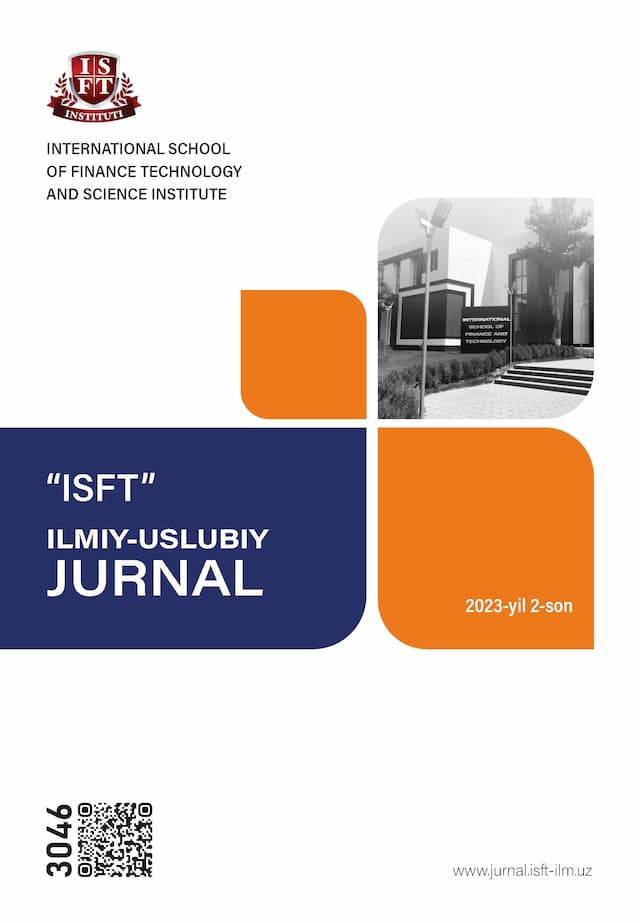
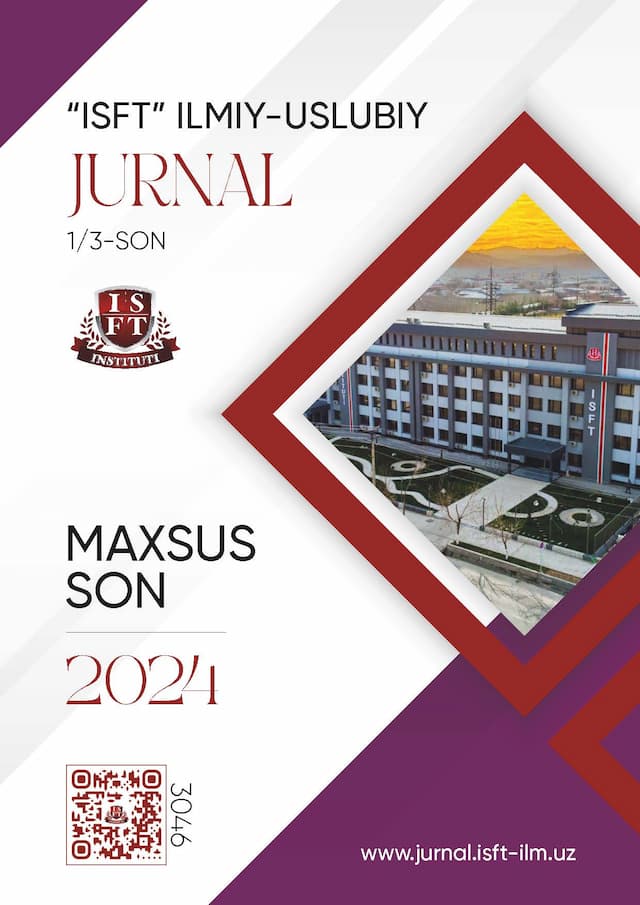
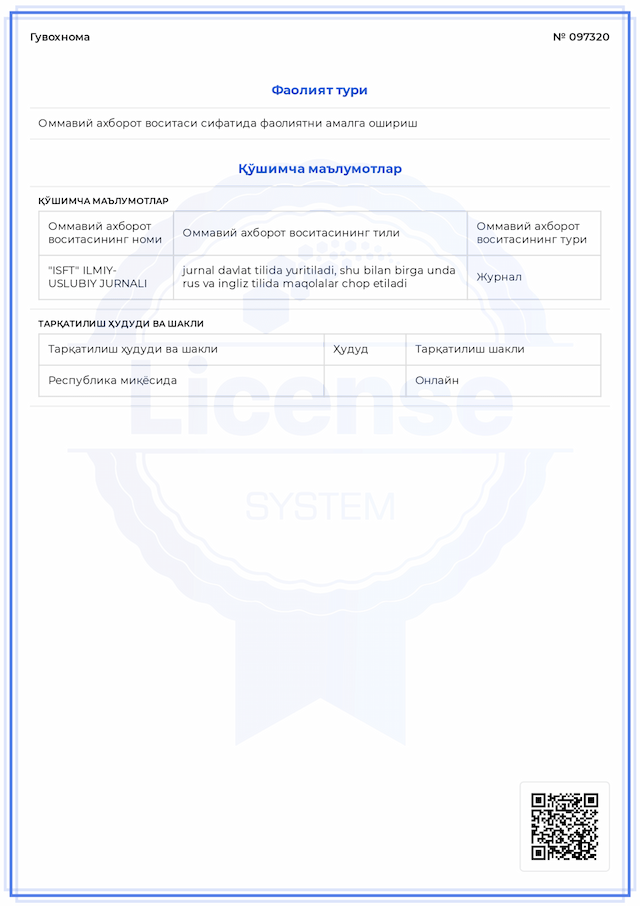
Научно-методический журнал «ISFT» получил право на издание на основании свидетельства № 097320, выданного Агентством информации и массовых коммуникаций при Администрации Президента Республики Узбекистан. В журнале публикуются статьи на узбекском, русском и английском языках.
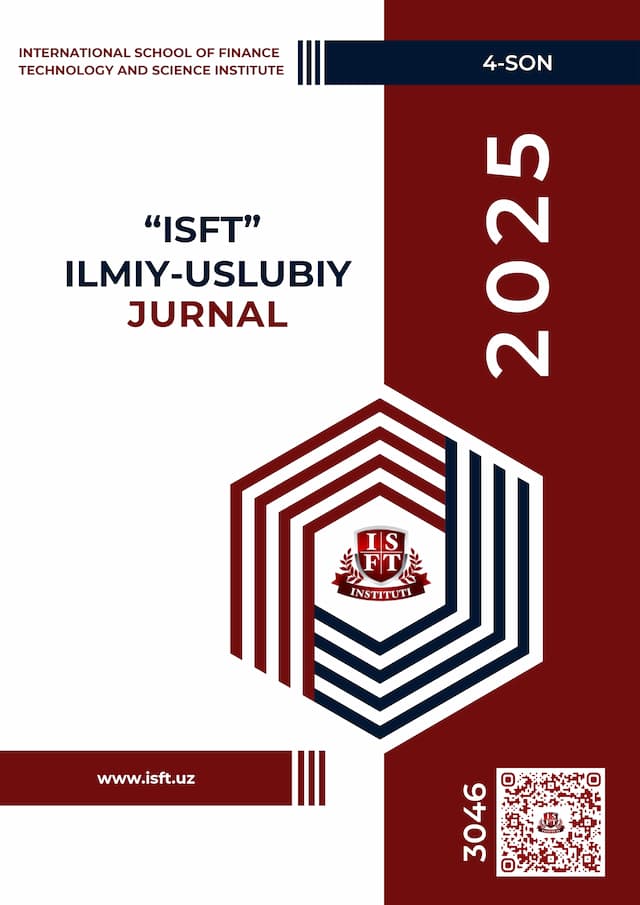
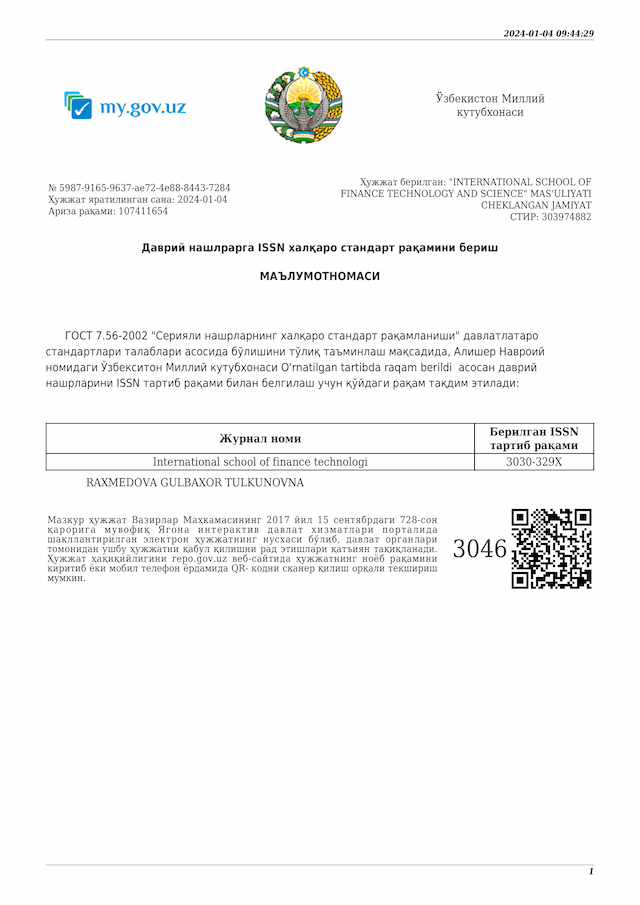
Кроме того, в целях обеспечения полного соответствия периодических изданий международным стандартным требованиям, научно-методическому журналу «ISFT» присвоен ISSN 3030-329X (Международный стандартный номер серийных изданий), и его деятельность осуществляется под данным номером.
Периодичность журнала – один выпуск в квартал.
At the ISFT Institute, we believe that a strong institution is built on fairness and respect for every member of our community. Our internal governance follows the principles set out in the Labour Code of Uzbekistan, the Law on Trade Unions, and International Labour Standards. In line with these values, ISFT fully recognises the right of all staff, including women and international employees, to join and participate in unions.
ISFT’s recognition of unions and protection of labour rights is grounded in a clear and practical policy framework. This includes the ISFT Policy on Non-Discrimination Against Women, the Human Rights and Ethical Employment Policy, the Policy on Equity, Diversity, and Inclusion in the Workplace, and the Policy on Equivalent Rights for Outsourced Workers. Together, these policies translate the principles of SDG 8.8 into everyday practice by safeguarding freedom of association, supporting collective dialogue, and promoting safe and respectful working conditions for all employees. They ensure that every staff member, regardless of gender, nationality, or employment status, can access protection mechanisms, engage openly with representatives and raise concerns confidently, knowing they are protected from discrimination.
ISFT has established an inclusive and independent staff representative structure, led by the institutional council, which brings together employees from diverse roles and backgrounds. Through a structured consultative and agreement-based framework, the council is actively involved in discussions affecting working conditions and institutional development. This approach supports fair employment practices, equal treatment, and provides a trusted channel for dialogue between staff and institutional leadership. By aligning internal policies with national legislation and internationally recognised labour standards, ISFT fosters a safe, transparent, and respectful working environment in which all members of the community feel represented and protected.
Too see our Council members, visit this page
To learn more, browse the links to our events and initiatives:


The ISFT Institute is steadily strengthening its contribution to the Sustainable Development Goals (SDGs) through mission-driven research. So far, ISFT faculty members have published over 100 Scopus-indexed papers, showcasing the Institute’s increasing prominence in the global academic scene and its expanding impact on sustainability-focused research.Here is a selection of our published work — a reflection of how we’re helping shape meaningful change and a better future.
Beyond international publishing, ISFT operates its own peer-reviewed Scientific–Methodological Journal, active since 2023. Over this period, 9 issues have been released, featuring more than 180 research articles across finance, economics, education, philosophy, and philology. A meaningful share of ISFT’s research is devoted to themes that directly support the Sustainable Development Goals. Studies on the green economy and green accounting make up around 14% of all publications (25 articles), showing how seriously the Institute approaches environmental responsibility. Research on quality education and innovative teaching technologies accounts for about 10.5% (19 articles), reflecting our desire to make learning more engaging, modern, and accessible.
Attention to psychological well-being forms another important research direction, with nearly 8% of published work (14 articles) addressing mental health, emotional development, and student support. Topics related to gender equality and women’s empowerment represent around 6.5% of the output (12 articles), highlighting our commitment to fairness, inclusion, and expanding opportunities for women.
Meanwhile, about 6% of the studies (11 articles) explore the growing influence of artificial intelligence in education, showing how ISFT researchers stay curious about new technologies and their impact on the future of learning.
A significant milestone for the Institute came in November 2025, when the ISFT Scientific–Methodological Journal was officially added to the Higher Attestation Commission (OAK) list in philosophy, philology, psychology, and political science. This recognition significantly strengthened the journal’s academic credibility and signalled that ISFT’s research culture is maturing and gaining national respect.
All of these efforts — international cooperation, support for young scholars, and the growth of internal research platforms — reflect one shared vision. ISFT believes that strong, meaningful research is not just about publications; it is about contributing to a better future.